If you’re weighing up a retaining wall, you’ve probably found a lot of conflicting numbers online. Some of them are for Perth. Some are for the eastern states. Almost none of them account for your actual block.
This guide cuts through it. We’ll compare the main wall types on cost, durability, maintenance, and looks, and be honest about what each one is good and bad at. We’ll also explain why two walls that look identical can be priced hundreds of dollars per metre apart.
One thing up front: every figure here is an indicative WA market range to help you compare options. It’s not a quote. The only reliable price comes from someone looking at your site. With that said, let’s get into it.
Treated pine timber sleepers are usually the cheapest to build. They’re the lowest upfront cost and the easiest to install, which makes them popular for low garden walls. But “cheapest today” and “cheapest over 20 years” aren’t the same thing, and pricing swings hugely with height, soil, drainage, access, and engineering.
Here’s a rough guide to how the main options compare. These are indicative installed WA ranges per lineal metre at around 1 metre high. Treat them as relative signposts, not quotes.
$–$$
| Retaining Wall | Relative Cost | Indicative WA Range (per lin. m, ~1m) | Typical Strength | Maintenance |
|---|---|---|---|---|
| Timber sleepers | $ | ~$240–$420 | Low–moderate | Occasional resealing |
| Timber post & panel | $–$$ | Similar to sleepers, slightly up | Low–moderate | Panel swaps as needed |
| Concrete post & panel | $$ | ~$280–$480 | High | Very low |
| Limestone (recon. block) | $$ | ~$280–$520 | High | Low |
| Brick / rendered block | $$$ | ~$420–$680 | High | Low |
| Poured concrete | $$$$ | Very high | Very high | Very low |
| Natural stone (e.g. Tamala) | $$$$ | ~$700–$1,400 | High | Low |
Indicative WA ranges only, at ~1m height. Albany freight and access can move these. GSTL prepares site-specific quotes because every property is different.
On top of the wall itself, budget for the extras that catch people out:
This is the section that saves people from sticker shock. Two walls of the same material and length can differ wildly in price. Here’s why.
The point: the material is only one line in the quote. Sometimes it’s not even the biggest one.
Little-known fact: On many jobs, excavation, drainage, and engineering cost more than the wall material itself. A “cheaper” material doesn’t guarantee a cheaper wall.
Overview: Treated pine sleepers, either stacked or slotted between posts. The classic budget option with a warm, natural look.
Advantages:
Disadvantages:
Cost position: The cheapest to build ($). Just remember the lifespan trade-off.
Best for: Low garden walls, planter beds, budget projects, and anywhere the natural timber look is the goal.
Often overlooked: Drainage matters just as much for timber as for concrete. Timber sitting in wet ground rots faster, so skimping on drainage shortens its life noticeably.
Little-known fact: In well-drained sandy soil, treated pine can last 15 to 25 years. In poorly drained or clay-heavy ground, the same timber can fail in 8 to 15 years. The soil and drainage matter more than the timber itself.
Overview: Posts (steel or timber) set in concrete footings, with sleepers slotted in between as panels. The neater, more maintainable cousin of stacked timber.
Advantages:
Disadvantages:
Cost position: Slightly above plain timber ($ to $$), but the easy repairs can pay off long term.
Best for: Homeowners who want the timber look but would rather swap a panel than rebuild a wall down the track.
Little-known fact: The post-and-panel design means a single damaged sleeper is a quick fix, not a full demolition. Over the life of the wall, that can make it better value than it first looks.
Overview: Galvanised steel posts set in concrete footings, with precast concrete sleepers slotted between. The most popular engineered wall in Australian yards.
Advantages:
Disadvantages:
Cost position: Mid-range ($$). Usually 20 to 40 percent more than timber upfront, but it lasts several times longer.
Best for: Most structural walls, and anyone who wants to build once and forget about it.
Often overlooked: You don’t automatically need heavy machinery. Lower walls with good access can often be built by a small crew by hand. It’s the taller walls, long runs, and awkward access that bring the machinery in.
Little-known fact: Because concrete sleepers come in timber-look and stone-look finishes, you can get the appearance of timber or stone with the lifespan of concrete. It’s a common way to sidestep the looks-versus-longevity trade-off.
Overview: A steel-reinforced concrete wall poured on site. The strongest option, and usually the most involved.
Advantages:
Disadvantages:
Cost position: Premium ($$$ to $$$$), and priced per project rather than off a simple rate.
Best for: Serious retaining where strength and longevity outweigh everything else.
Often overlooked: Because it’s engineered and formed on site, the design and prep are a bigger part of the cost than the concrete itself.
Little-known fact: Poured concrete is often the only sensible choice for walls that also need to hold back water, not just soil. That’s a job most slot-in systems aren’t built for.
Overview: A brick-faced wall, usually built over a reinforced core or footing. Neat, traditional, and easy to match to a brick home.
Advantages:
Disadvantages:
Cost position: Mid-to-higher ($$$), largely because of the labour involved.
Best for: Homeowners who want the wall to tie in with a brick house and value the finished look.
Often overlooked: The strength usually comes from the core and footing behind the brick, not the brick itself. The brick is mostly the finish.
Little-known fact: Brick rarely fails on its own. When a brick retaining wall has problems, it’s almost always the footing or the drainage behind it, not the bricks.
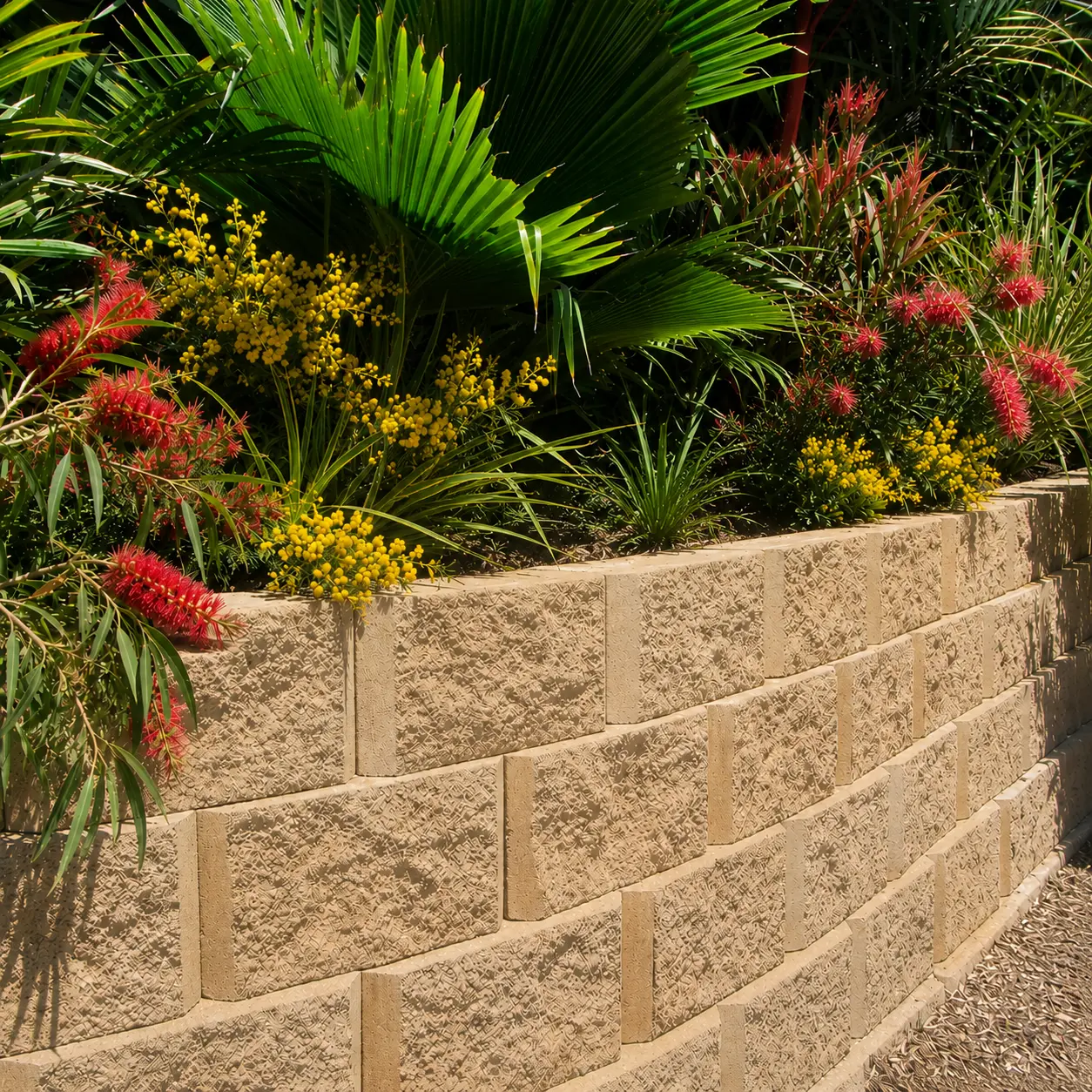
Overview: Limestone blocks, either reconstituted (consistent, manufactured) or natural stone. A very Western Australian look that suits a lot of Albany and coastal homes.
Advantages:
Disadvantages:
Cost position: Reconstituted block is mid-range ($$). Natural stone like Tamala sits at the premium end ($$$$).
Best for: Coastal and local-style blocks where the WA limestone look is part of the appeal.
Often overlooked: There’s a big price and consistency difference between reconstituted limestone block and natural limestone. It’s worth being clear on which you’re pricing.
Little-known fact: Limestone’s natural look is a big part of why it suits Albany properties, but on a windy, salty coastal block, the fixings and drainage still need to be specified for the conditions. The stone alone doesn’t do all the work.
$–$$–$$
| Factor | Timber | Poured Concrete | Concrete Post & Panel | Timber Post & Panel | Limestone | Brick |
|---|---|---|---|---|---|---|
| Appearance | Natural, rustic | Any finish | Versatile (incl. look-alikes) | Natural, tidy | Natural, WA style | Neat, traditional |
| Relative cost | $ | $$$$ | $$ | $–$$ | $$–$$$$ | $$$ |
| Durability | Low–moderate | Very high | High | Low–moderate | High | High |
| Maintenance | Occasional | Very low | Very low | Occasional | Low | Low |
| Design flexibility | Moderate | High | High | Moderate | Moderate | Moderate |
| Engineering potential | Limited | Highest | High | Limited | Good | Good |
| Installation speed | Fast | Slower | Moderate | Fast | Moderate | Slower |
| Access needs | Low | Higher | Varies by size | Low | Higher for big walls | Moderate |
| Best for | Low garden walls | Tall/demanding walls | Most structural walls | Timber look, easy repairs | Coastal/WA-style blocks | Matching brick homes |
A simple way to narrow it down:
Then sanity-check it against your site: the height, the access, the drainage, and whether engineering is in play. Those often matter as much as personal preference.
Here’s the thing a price-per-metre table can’t tell you: the material doesn’t decide the total cost on its own.
Engineered retaining walls in Australia are designed to a standard (AS 4678, the standard for earth-retaining structures). Where a wall needs certification, footings, and a proper drainage system, that work is part of the real cost, whatever material sits on the front.
That’s why a “cheaper” wall isn’t always cheaper. If your site needs significant excavation, a lot of drainage, or an engineer’s involvement, those costs apply across the board. A budget material on a demanding site can end up costing more than a mid-range material on an easy one.
Drainage in particular is not the place to save money. Water building up behind a wall is one of the top reasons walls fail. Ag pipe, clean draining aggregate, and geotextile fabric let water escape instead of pushing on the wall. In a wetter area like the Great Southern, that’s essential.
Looks matter, so here’s roughly what each option gives you:
Where a specific colour or product range matters to you, it’s worth confirming what’s currently available rather than assuming. Ranges change, and we can show you the current options that suit your project.
“The cheapest material always gives the cheapest wall.” Not true. Excavation, drainage, access, and engineering often cost more than the material. A cheap material on a hard site can beat the price of a mid-range material on an easy one.
“The visible wall is what determines its strength.” The footing, drainage, and backfill usually do more for a wall’s strength and lifespan than the face you can see.
“Concrete always looks industrial.” Modern concrete sleepers come in timber-look and stone-look finishes. You’d often struggle to pick them from the real thing at a glance.
“Timber retaining walls don’t need drainage.” They absolutely do. Timber in wet ground rots faster, so poor drainage shortens its life more than almost anything else.
“All retaining walls have the same council requirements.” No. Requirements change with height, whether you’re cutting or filling, how close you are to a boundary, and your local council. Always check.
“A taller wall is just the same wall, but taller.” Not even close. Taller walls face far more soil pressure and need deeper footings, more reinforcement, and better drainage. Cost climbs steeply with height.
There’s no single “best value” retaining wall. Timber wins on upfront price. Concrete wins on lifespan and low maintenance. Limestone and brick win on looks in the right setting. The right pick depends on your budget, your block, and how long you want the wall to last.
And the biggest cost drivers, height, drainage, access, and engineering, aren’t about the material at all. That’s exactly why a real quote beats any online estimate.
If you’re comparing options and want a straight answer for your property, we’re happy to assess the site and walk you through what makes sense before you commit. No hard sell, just clear advice on the wall that suits your block and your budget.
What is the cheapest type of retaining wall? Treated pine timber sleepers are usually the cheapest to build. They’re low cost and quick to install, which suits low garden walls. Just weigh that against a shorter lifespan, especially in wet or clay soils, and remember that height, drainage, and access can change the picture on any given site.
What is the most durable retaining wall? For everyday residential walls, concrete post and panel is hard to beat, with a lifespan built for 50-plus years and very little maintenance. Poured reinforced concrete is stronger again for tall or demanding jobs. Both easily outlast timber, provided the drainage is done properly.
Is concrete cheaper than limestone? They’re often in a similar range for reconstituted limestone block versus concrete post and panel. Natural stone limestone sits well above both. As always, height, access, and site conditions can shift the comparison, so it’s worth pricing both for your specific job.
Is timber retaining cheaper than concrete? Upfront, yes. Timber is usually the cheaper build. Over the life of the wall, concrete often works out comparable or better, because it can last three to four times longer without needing replacement. It depends on how long you plan to keep the wall.
How long does a timber retaining wall last? Often 15 to 25 years in well-drained sandy soil, but commonly 8 to 15 years in poor drainage, heavy clay, or wet ground. Coastal exposure can shorten it further. Good drainage is the single biggest factor in how long timber lasts.
How long does a concrete retaining wall last? Concrete post and panel walls with galvanised steel posts are designed to last 50-plus years with good drainage. Concrete doesn’t rot or warp, and the steel posts resist corrosion in all but the harshest conditions. Poured concrete lasts a very long time too.
What retaining wall is best for a sloping block? It depends on the height and how much soil you’re holding. Steeper or taller situations usually point to concrete post and panel or poured concrete, often as a series of terraces rather than one tall wall. Drainage and engineering become important, so it’s worth getting the site assessed.
What retaining wall requires the least maintenance? Concrete (both post-and-panel and poured) needs the least upkeep. It doesn’t rot, warp, or need resealing. Limestone and brick are also low maintenance. Timber needs the most attention over its life.
Does retaining wall cost include drainage? It should, but always check the quote. Drainage (ag pipe, aggregate, and fabric) is part of a properly built wall, not an optional extra. If a quote looks unusually cheap, make sure the drainage is actually in there.
Does retaining wall cost include engineering? Not always, so ask. Engineering design, permits, and any soil report are often quoted separately from the wall build. On sites that need them, they’re a real part of the total, so it’s worth getting clarity upfront.
How much does retaining wall installation cost in Albany? As a rough WA guide, installed walls commonly run from a few hundred dollars per square metre for low timber up to well over a thousand for tall reinforced concrete or natural stone. Albany freight and access can move those figures, so the only reliable number is a site-specific quote.